TWO PROMINENT CHIEFS URGE GROWTH WITH DEVELOPMENT AND POLICY CONTINUITY
The President of the Eastern Regional House of Chiefs, His Royal Majesty Nene Sakite II, has underscored the need for Ghana to move beyond short-term gains and embrace sustainable, long-term development strategies, declaring that “growth must come with development.”
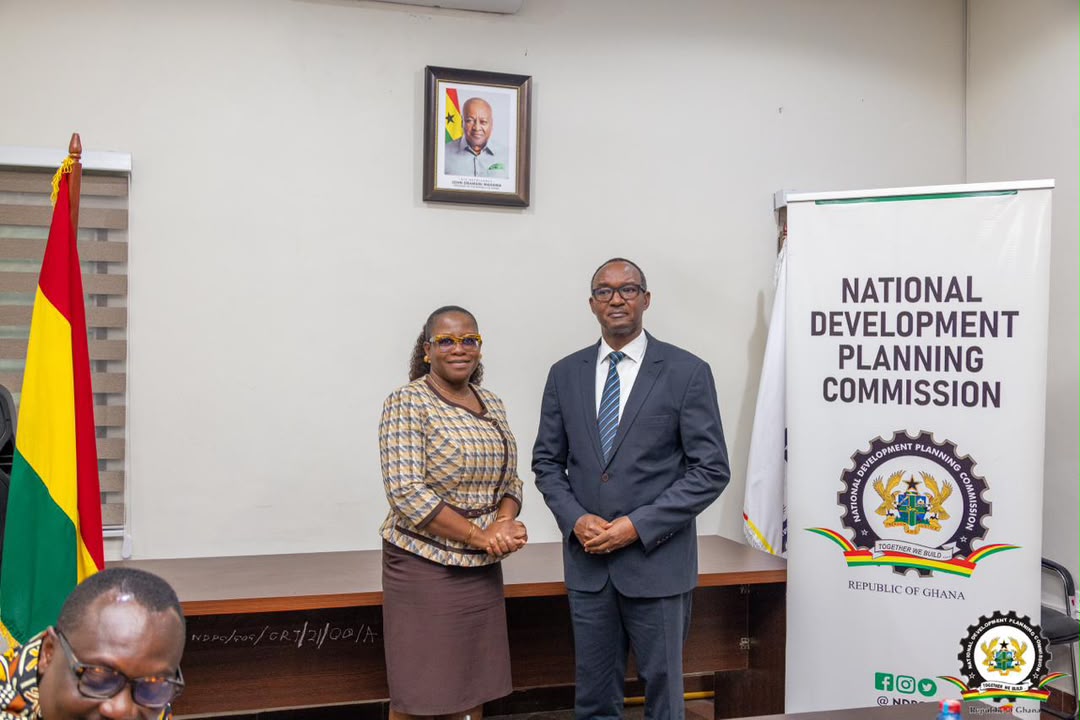
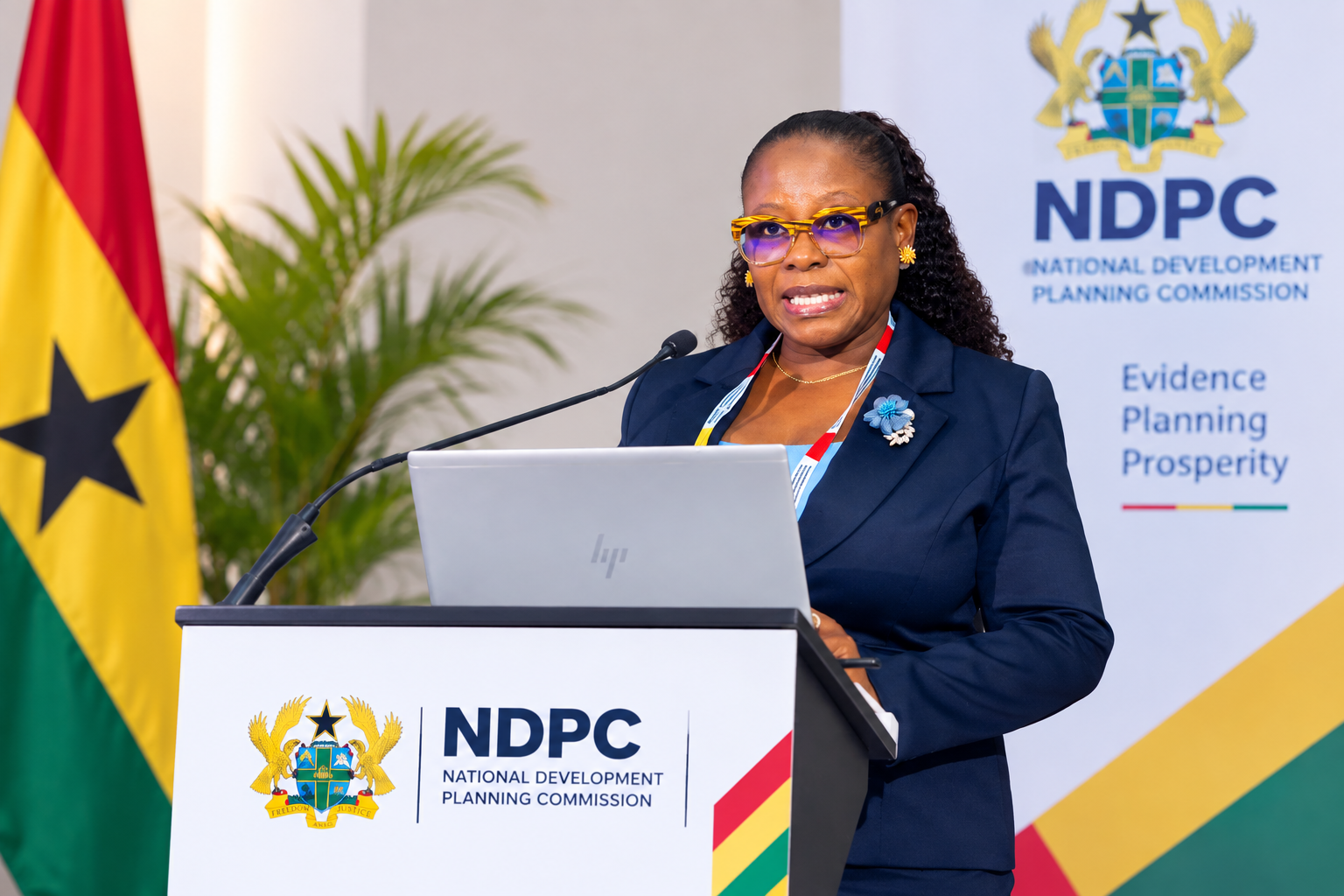
Speaking during an engagement with a team from the National Development Planning Commission, led by its Chairman, Dr. Nii Moi Thompson, and Director-General, Dr. Audrey Smock Amoah, Nene Sakite II highlighted the importance of strategic planning, particularly in the agricultural sector. Using farmers as a practical example, he noted that while selling produce to the highest bidder may seem profitable in the short term, such decisions could have serious long-term consequences.
“In ten years, the farmers could be the poorest,” he cautioned, explaining that immediate financial gains must not overshadow the need to secure livelihoods for generations to come. According to him, even if alternative employment opportunities may not match current earnings, strategic planning for sustainable development remains essential to prevent long-term hardship.
He highlighted the real challenges confronting farmers, particularly those dealing in perishable goods such as tomatoes and other vegetables. He explained that many farmers struggle not only with production but also with transportation and access to markets.
“They are not even able to bring their produce to the market,” he noted. “Even when they bring it to the roadside, conveying it from the roadside to the market becomes a problem.” Because tomatoes and similar goods perish easily, delays in transportation often result in heavy losses. By the time the produce reaches consumers, much of it has already gone bad, leaving farmers with little or no profit for their hard work.
He further cited illegal mining as another major threat to sustainable livelihoods. According to him, some cocoa farmers are tempted to sell their lands for mining activities because the immediate financial gain far outweighs what they would earn from farming over several years.
“They can farm for years and not even get half of what they receive from selling their land,” he observed. However, he warned that this short-term decision ultimately leaves them poorer in the long run, as they lose both their land and their steady source of income.
The traditional leader emphasised that while alternative economic opportunities may not immediately match the lump sum farmers receive from selling their lands, policymakers must at least ensure that viable and sustainable livelihood options are available.
“Even if we cannot provide the exact value they are offered, we should think about giving them something that will make them comfortable,” he urged. Planning, he stressed, must prioritise sustainable income rather than quick financial gains.
He characterised his address as a practical exposition in development economics, underscoring the central premise that economic growth must be matched by tangible development outcomes. In his view, genuine progress is measured not merely by statistical gains, but by the establishment of resilient systems that safeguard farmers, conserve natural resources, and ensure the long-term wellbeing of communities.
In concluding, he reiterated the theme of his reflections “Growth Must Come with Development.” He emphasised that true national progress must be guided by deliberate policies that balance economic expansion with social protection, environmental stewardship, and long-term prosperity. “We are so happy to be guided by these words of wisdom,” he said, urging policymakers, stakeholders, and development practitioners to adopt thoughtful and sustainable approaches in shaping Ghana’s future.
Meanwhile, the President of the Volta Regional House of Chiefs, Togbe Tepre Hodo IV, echoed similar concerns about the country’s development trajectory, particularly the impact of partisan politics on national continuity. Reflecting on Ghana’s history, he lamented the frequent disruption of policies and programmes whenever political power changes hands.
“Partisan politicians really messed us up in this country,” he stated candidly. “When a new group comes to power, without even considering the merits of what the previous administration was doing, everything is dismissed. That has been our problem.”
He posed what he described as the most critical question for the country’s future: “How can we ensure continuity in national development planning, regardless of who is in power?” Recounting his personal experience at the House of Chiefs, he revealed how carefully developed proposals were abandoned simply because a new administration assumed office. “We do not focus on the merit or substance of what experts have done. All that matters is party affiliation,” he observed.
Although legislative attempts have been made to guarantee policy continuity, he admitted that such efforts have yet to yield the desired results. He therefore called for collective national reflection to ensure that partisan interests do not derail progress.
Ending on a hopeful note, he urged Ghanaians to commit to a future where development plans transcend political cycles. “I just pray that there will be continuity going forward. Otherwise, we are talking in circles.”
Together, the two chiefs’ remarks underscore a shared message: Ghana’s economic growth must translate into tangible, sustainable development, guided by strategic planning, policy continuity, and people-centred approaches.
END
NDPC PR-UNIT