NDPC Presents Medium-Term National Development Policy Framework (2026–2029) to Ministry of Finance: A Roadmap for Ghana’s Development
The National Development Planning Commission (NDPC) on Wednesday, 14 January 2025, presented the Medium-Term National Development Policy Framework (2026–2029) to the Ministry of Finance.
The framework articulates the Government’s vision for the next four years, with a focus on resetting Ghana’s development agenda, creating employment opportunities, strengthening accountability, and promoting shared prosperity.
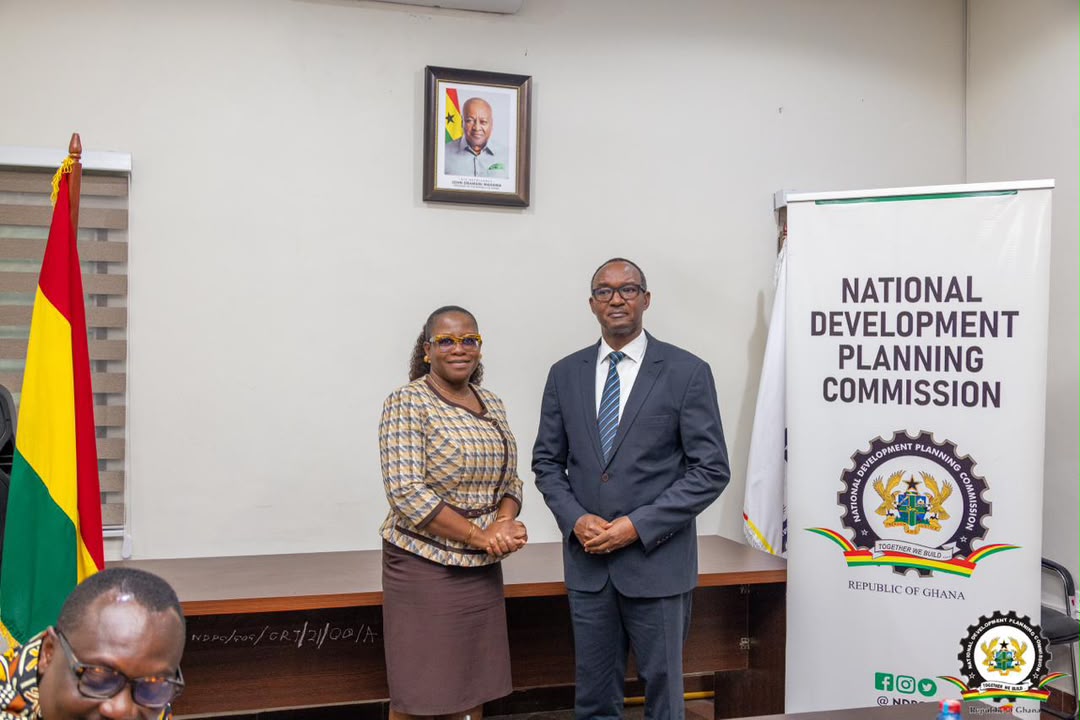
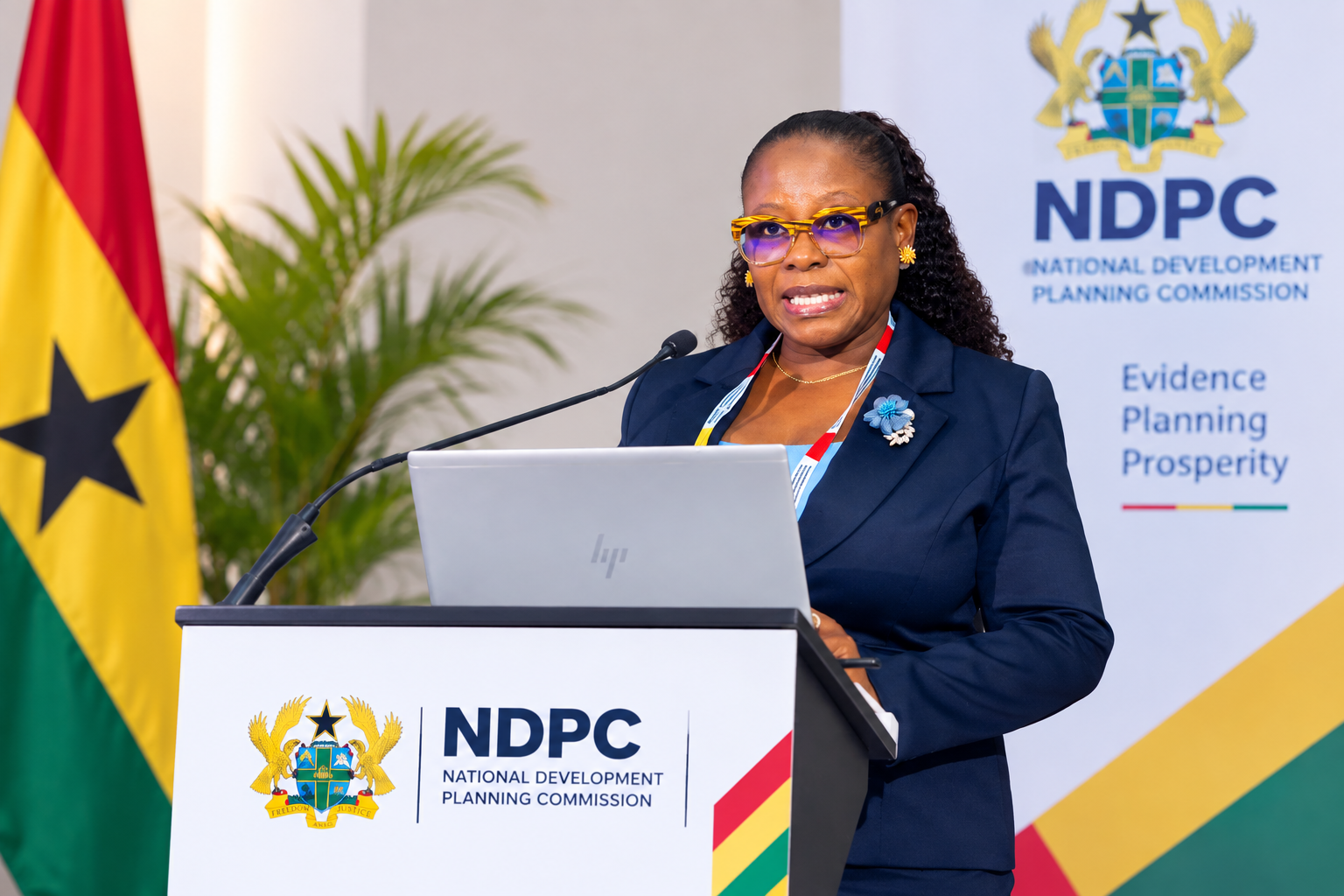
Dr. Audrey Smock Amoah, Director-General of the NDPC and leader of the delegation, commended the Ministry of Finance for their role in the certification process. She highlighted their effective interventions during the budget hearings, which ensured improved compliance by Ministries in the submission of their plans.
Dr Smock Amoah explained that the policy framework serves as the primary guide, alongside the official planning guidelines, for institutions at all levels in the preparation of their development plans. She noted that the NDPC welcomed the opportunity to present the framework, given its importance in promoting coordinated and coherent national planning.
Mr. Samuel D. Arkhurst, Coordinating Director (Technical) at the Ministry of Finance, noted the importance of continuous engagements between MoF and NDPC to shape national development.
He highlighted the need for continuous prioritisation to ensure that the most fundamental interventions are undertaken to move the economy forward.
In his presentation, Mr. Daniel Amofa, Principal Planning Analyst at the NDPC, outlined the structure of the framework, the five broad dimensions: economic development; social development; environment, infrastructure and spatial development; governance and institutional development; and international relations.
Mr. Amofa referenced Article 36 of the Constitution, which emphasises effective economic management to enable citizens to realise their full potential. He explained that the President’s Coordinated Programme of Economic and Social Development is translated into the policy framework to guide national development efforts.
The framework is informed by Ghana’s current economic realities, international obligations, and key domestic challenges, including high youth unemployment, illegal mining (galamsey), and persistent sanitation deficits. While progress has been made in access to water, sanitation remains a major concern that requires targeted policy interventions.
Ghana’s international commitments, including the Sustainable Development Goals, Agenda 2063, ECOWAS Vision 2050, and the Paris Agreement, have been fully integrated into the framework.
It clearly demonstrates how each policy objective and strategy aligns with these global development agendas.
The presentation emphasised the urgency of addressing macroeconomic challenges, including high inflation, fiscal overruns, and exchange rate pressures.
It further stressed a commitment to moderate and sustainable fiscal management, guided by the principle of spending within domestic revenue limits. It also highlighted on addressing illegal mining, energy debts, enhancing education and health services, reforming the judiciary, among others.
The successful implementation of the policy framework will require strong collaboration among all stakeholders to realise the vision of a just, inclusive and prosperous Ghana.
The session was attended by management and technical staff of the NDPC.