NDPC, ISD Deepen Collaboration to Advance National Development Plan Implementation
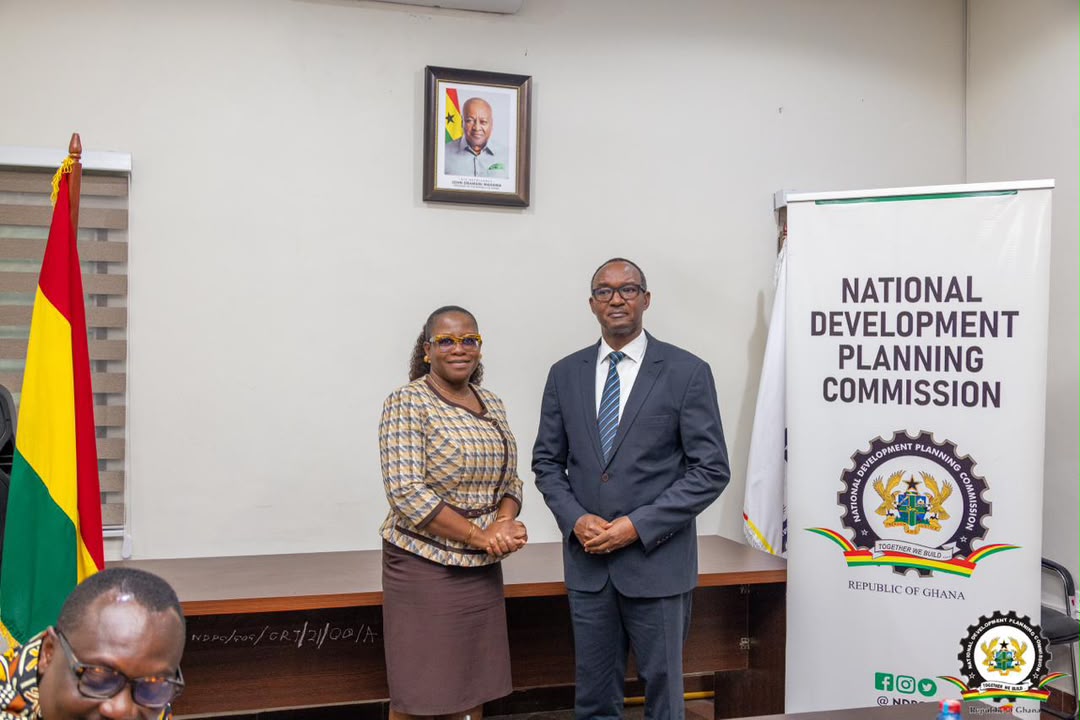
The National Development Planning Commission (NDPC) and the Information Services Department (ISD) on Friday, 29th May 2026 reaffirmed their commitment to closer collaboration during a stakeholder engagement held at the ISD Conference Room in Accra. The meeting focused on supporting the preparation and effective implementation of Ghana’s Consolidated National Development Plan.
The Consolidated National Development Plan seeks to harmonise existing long-term development frameworks into a single national blueprint to guide Ghana’s development trajectory and ensure coherence in planning, implementation and monitoring.
As part of the stakeholder consultation process, the NDPC engaged officials of the ISD to explore strategic areas of partnership, including public communication, citizen engagement and nationwide awareness creation to support the Plan’s successful rollout.
The engagement also forms part of broader efforts to strengthen the communication and civic foundations necessary for effective national development planning, including complementary initiatives aimed at reinforcing national values and social cohesion.
In this regard, the Commission is championing a complementary national agenda themed “New Values, New Society”, which seeks to re-orient the Ghanaian citizenry towards a shared value system that will serve as the moral and civic bedrock of national development efforts.
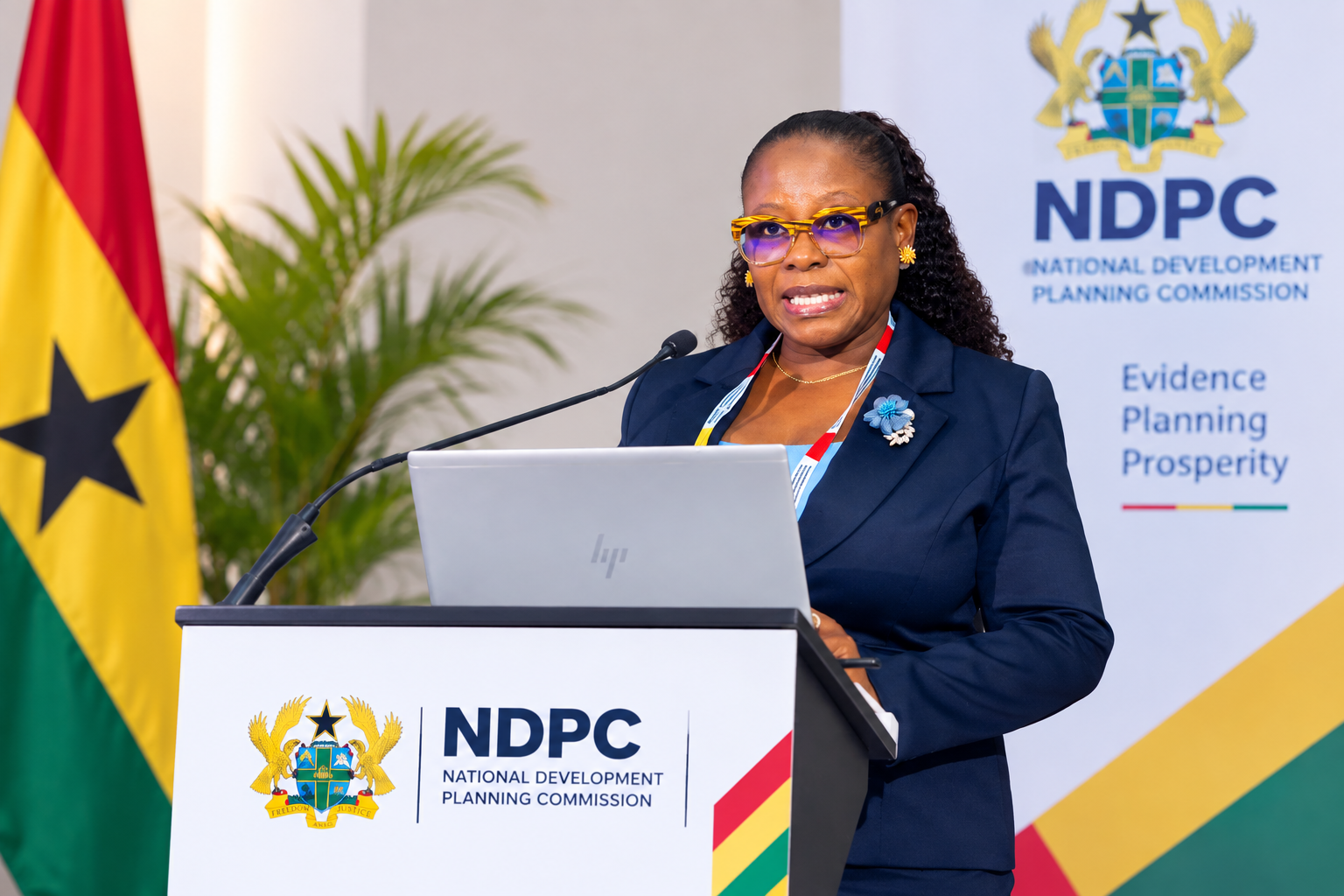
Presenting the Commission’s vision for the Consolidated National Development Plan, the Director-General of the NDPC, Dr. Audrey Smock Amoah, said the Commission had been tasked by the President to prepare a Consolidated National Development Plan to guide Ghana’s long-term transformation. She emphasised the importance of complementing sound policies with an effective public communication strategy that connects with citizens and inspires behavioural change.
She noted that changing patterns of information consumption require public institutions to rethink how they engage citizens and communicate national development priorities. “As we move forward, one important question we must ask ourselves is how we can also change the way we work and communicate with the people,” she said. “Today, information dissemination must evolve with changing times and changing habits. We are proposing a more strategic and people-centred approach through documentaries, jingles, posters, social media content and other communication tools that can effectively reach citizens where they are.”
Dr. Amoah observed that digital platforms have become central to everyday life and present a valuable opportunity to deepen public engagement on development issues. “Almost everyone is constantly on their phones, whether at home, in the office or while travelling,” she stated. “This presents a great opportunity for us to communicate effectively through these channels and ensure that the right information reaches the public in a timely and engaging manner.”
While highlighting the growing importance of digital communication, the Director-General stressed that traditional outreach methods remain indispensable, particularly in rural communities. She proposed leveraging ISD’s cinema vans and community engagement platforms to broaden public participation in the national development agenda.
She further called for stronger institutional coordination through the establishment of a joint technical working group and the development of a Memorandum of Understanding to guide collaboration and implementation efforts.
“Since we are planning together, we must also work together, implement together and ultimately account for the results together over time,” she said. “The work we are doing today is not just for the present moment; it is for the future of this country. Years from now, we should be able to look back with pride and say that what we planned delivered results and contributed meaningfully to national development.”
On her part, the Director of the Information Services Department (ISD), Dr. Nafisah Mahama, welcomed the initiative and described behavioural change as a critical ingredient in achieving Ghana’s long-term development aspirations.
She noted that while policies, institutions and resources are important, lasting national transformation depends on building a citizenry that embraces patriotism, responsibility, discipline and a shared commitment to national progress.
“One major area that stands out clearly from your presentation is the need for a comprehensive behavioural change campaign aimed at building a more patriotic, responsible and disciplined citizenry,” Dr. Mahama said. “Behavioural change is not a one-time activity; it is a sustained process that requires consistency, coordination and long-term commitment.”
The ISD Director highlighted the Department’s nationwide presence and communication infrastructure as valuable assets for advancing the proposed agenda. She said the recent introduction of new LED cinema vans, combined with ISD’s regional and district offices, places the Department in a strong position to support public education campaigns across the country.
“Through our media division, we can produce jingles, documentaries and educational content in various local languages to ensure wider accessibility and impact,” she stated. “Once the joint working group is established, timelines and responsibilities can be agreed upon so that implementation proceeds smoothly and all institutions are able to align their plans and actions.”
The collaboration forms part of broader efforts by the NDPC to ensure that Ghana’s Consolidated National Development Plan is anchored not only on economic and structural reforms, but also on the values, attitudes and civic responsibility required to sustain national transformation.